Ascott Introduces Cold Salt Spray Testing Down to 8°C

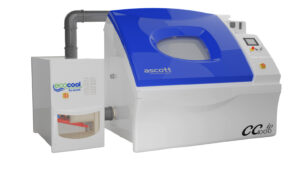
Ascott Analytical has expanded the capability of its corrosion testing equipment with the introduction of ACC145, a new cold salt spray option capable of controlling salt spray conditions down to 8°C.

The development responds to increasing demand for corrosion test environments that go beyond conventional neutral salt spray conditions and allow manufacturers to investigate how materials and coatings perform under colder, more demanding climates.

Why cold salt spray testing matters

Traditional salt spray testing is normally performed at an elevated chamber temperature.

However, components operating in real-world environments may experience salt contamination at significantly lower temperatures.

Marine equipment, offshore components, transport systems, automotive parts and defence applications may all be exposed to salt while operating in cool or cold environments.

This creates growing interest in corrosion testing that can reproduce those conditions more realistically.

Ascott’s ACC145 option allows compatible corrosion chambers to perform controlled salt spray testing at 8°C ±1°C, giving laboratories an additional tool for advanced materials and corrosion evaluation.

Extending conventional salt spray capability

Salt spray chambers are widely used to evaluate corrosion resistance in accordance with established standards including ASTM B117 and ISO 9227.

These traditional tests remain extremely important for quality control and comparative evaluation.

However, modern product development increasingly requires engineers to explore conditions outside traditional test parameters.

Cold salt spray testing allows laboratories to investigate the effect of saline contamination under lower-temperature conditions and can be incorporated into more complex environmental testing programmes.

Applications for cold corrosion testing

Potential applications include:

  • Marine and offshore equipment
  • Automotive components
  • Aerospace and defence systems
  • Coated metals
  • Fasteners and fixings
  • Electrical and electronic enclosures
  • Transportation infrastructure
  • Research and development programmes

For manufacturers supplying products into harsh climates, the ability to reproduce cold saline exposure within a controlled laboratory environment can provide valuable information during material selection and product validation.

Greater flexibility for cyclic corrosion testing

Modern cyclic corrosion tests increasingly combine several environmental conditions rather than exposing specimens to one constant climate.

A test programme may include:

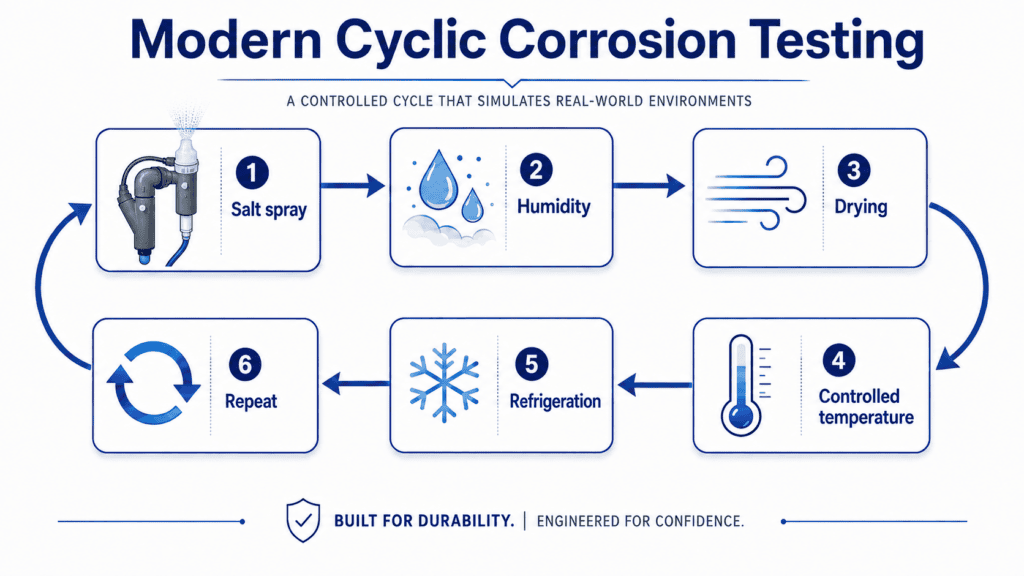
Cold Salt spray → high humidity → drying → temperature change → repeat

Adding cold salt spray capability allows laboratories to create an even broader range of programmed test sequences.

This is particularly relevant where test development is focused on reproducing environmental transitions that components may experience in service.

Precise low-temperature control

Maintaining a stable test environment at low temperature while generating corrosive salt fog presents additional technical challenges compared with conventional salt spray testing.

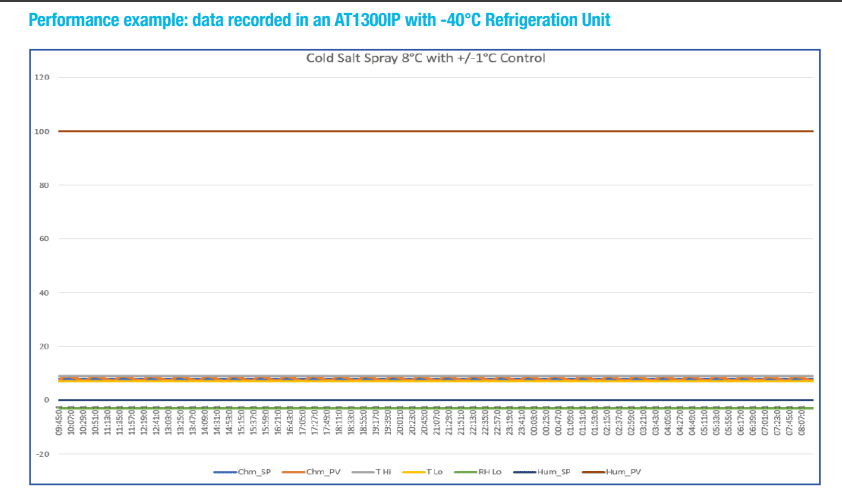
ACC145 has been developed to provide controlled cold salt spray operation at temperatures down to 8°C with +/-1°C of control, while maintaining the repeatability expected from laboratory corrosion testing equipment.

The option expands the environmental range available from Ascott corrosion chambers and complements existing refrigeration solutions available for more advanced cyclic corrosion systems.

Supporting new corrosion test requirements

Corrosion testing continues to develop as manufacturers seek closer relationships between laboratory testing and real-world exposure.

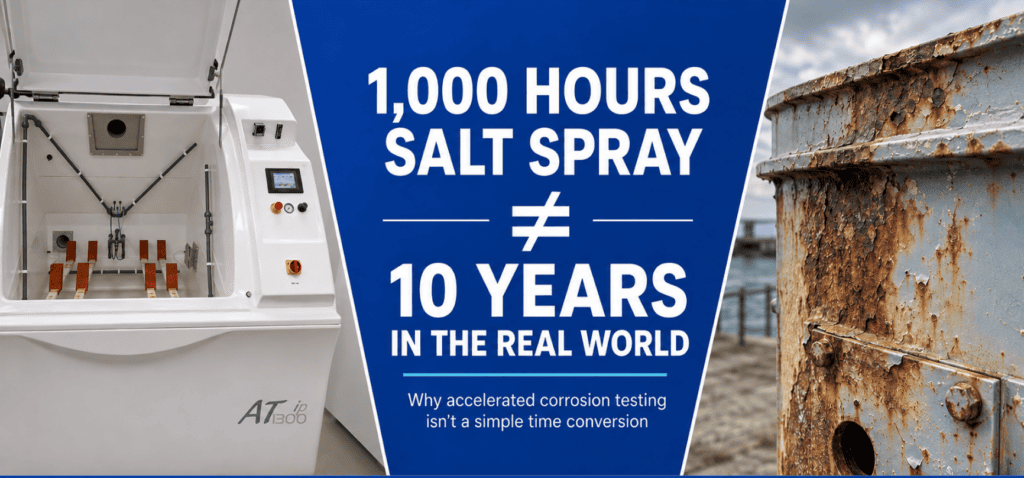
While no accelerated corrosion test can precisely reproduce every service environment, increasing the number of controllable test conditions gives engineers more flexibility when developing validation programmes.

Cold salt spray is another example of this evolution.

Rather than relying solely on continuous high-temperature salt fog, laboratories can investigate how corrosion processes behave when temperature, moisture, salt and drying conditions change.

Designed and manufactured by corrosion testing specialists

Ascott Analytical has specialised in the design and manufacture of corrosion test equipment for more than 35 years.

Its equipment is used around the world in automotive, aerospace, defence, coatings, electronics, marine and general manufacturing applications.

The introduction of ACC145 further expands Ascott’s range of specialist corrosion testing solutions and provides customers with another way to configure equipment around increasingly demanding test requirements.

Discuss your cold salt spray testing requirements

Cold salt spray testing may be suitable for organisations developing products for marine, automotive, defence and other demanding environments.

Ascott can review your required test conditions and advise whether ACC145 or another corrosion chamber configuration is the most appropriate solution.

Contact Ascott Analytical to discuss cold salt spray testing at temperatures down to 8°C.

Ascott Launches New Ultra Compact Salt Spray and Cyclic Corrosion Test Chambers

Ascott Analytical has expanded its corrosion testing range with the introduction of a new generation of compact front-loading salt spray and cyclic corrosion test chambers, designed specifically for laboratories where floor space is limited but testing capability cannot be compromised.

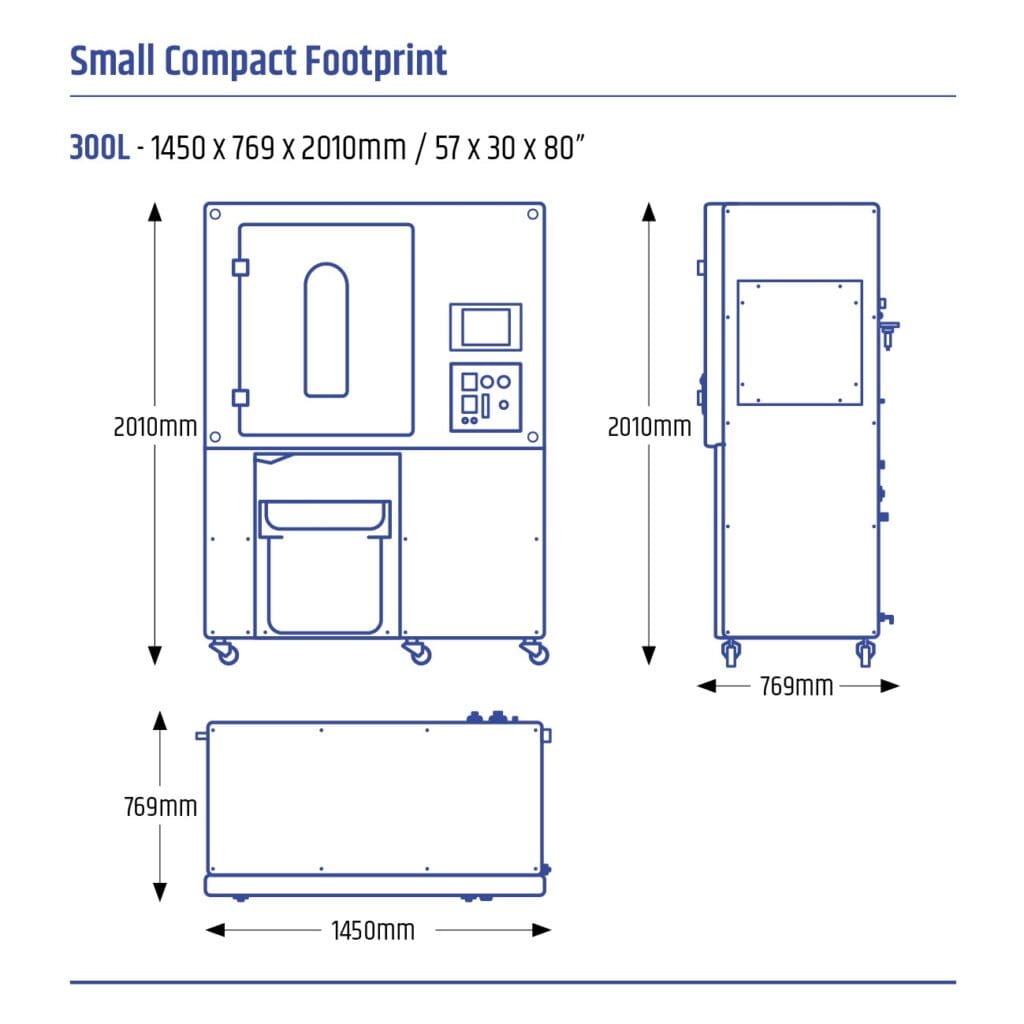
Available in 300-litre and 400-litre capacities, the new Ultra Compact range brings Ascott’s corrosion testing technology into a smaller, highly accessible format.

The range includes salt spray, premium salt spray and fully programmable cyclic corrosion configurations, giving laboratories greater flexibility when selecting equipment for international corrosion testing requirements.

Compact corrosion testing without compromising capability

Laboratory space is increasingly valuable.

While conventional corrosion chambers often use a top-opening canopy, Ascott’s new Ultra Compact range uses a front-loading test area, allowing the chamber to occupy a significantly more practical footprint within the laboratory.

The front door is pneumatically operated, providing convenient access to test samples while helping operators load and unload components easily.

This makes the new chambers particularly suitable for laboratories testing smaller components, coated panels, fasteners, electronics, automotive components and other samples where the capacity of a larger corrosion chamber simply isn’t required.

Available models include:

  • S300iS / S400iS – Standard Salt Spray Chambers
  • S300iP / S400iP – Premium Salt Spray Chambers
  • CC300iP / CC400iP – Cyclic Corrosion Test Chambers

Salt spray testing to international standards

The Standard models are designed for continuous salt spray testing and can support widely recognised corrosion test methods including ASTM B117 and ISO 9227.

Salt spray testing remains one of the world’s most widely used methods for evaluating the comparative corrosion resistance of metallic materials, surface treatments and protective coatings.

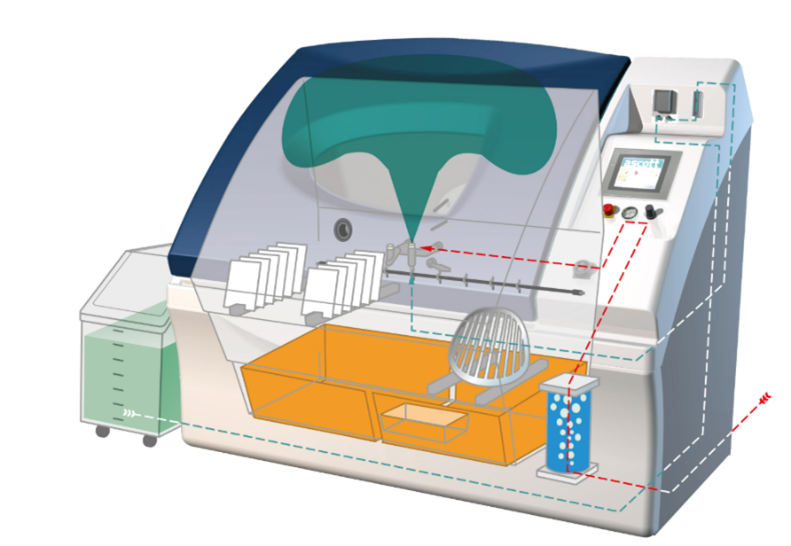
Inside the chamber, a controlled salt fog environment exposes samples to corrosive conditions under repeatable laboratory parameters.

For organisations carrying out routine quality control, coating evaluation or product validation, the compact S300iS and S400iS provide a practical way to introduce professional salt spray testing without installing a larger capacity chamber than the application requires.

More advanced salt spray testing

For laboratories requiring greater flexibility, the S300iP and S400iP Premium Salt Spray Chambers provide additional environmental control.

Alongside conventional salt spray testing, Premium models can perform modified corrosion tests where salt spray is combined with drying to perform Prohesion testing, or high humidity conditions (wetting) 95-100%RH.

Programmable touchscreen control allows test sequences to be created, stored and automatically executed, helping laboratories improve both repeatability and operator efficiency.

Compact cyclic corrosion testing

The CC300iP and CC400iP Cyclic Corrosion Test Chambers take the capability a step further.

Rather than exposing samples to one continuous environment, cyclic corrosion testing can repeatedly change the conditions surrounding a specimen.

The chambers can combine multiple environments including:

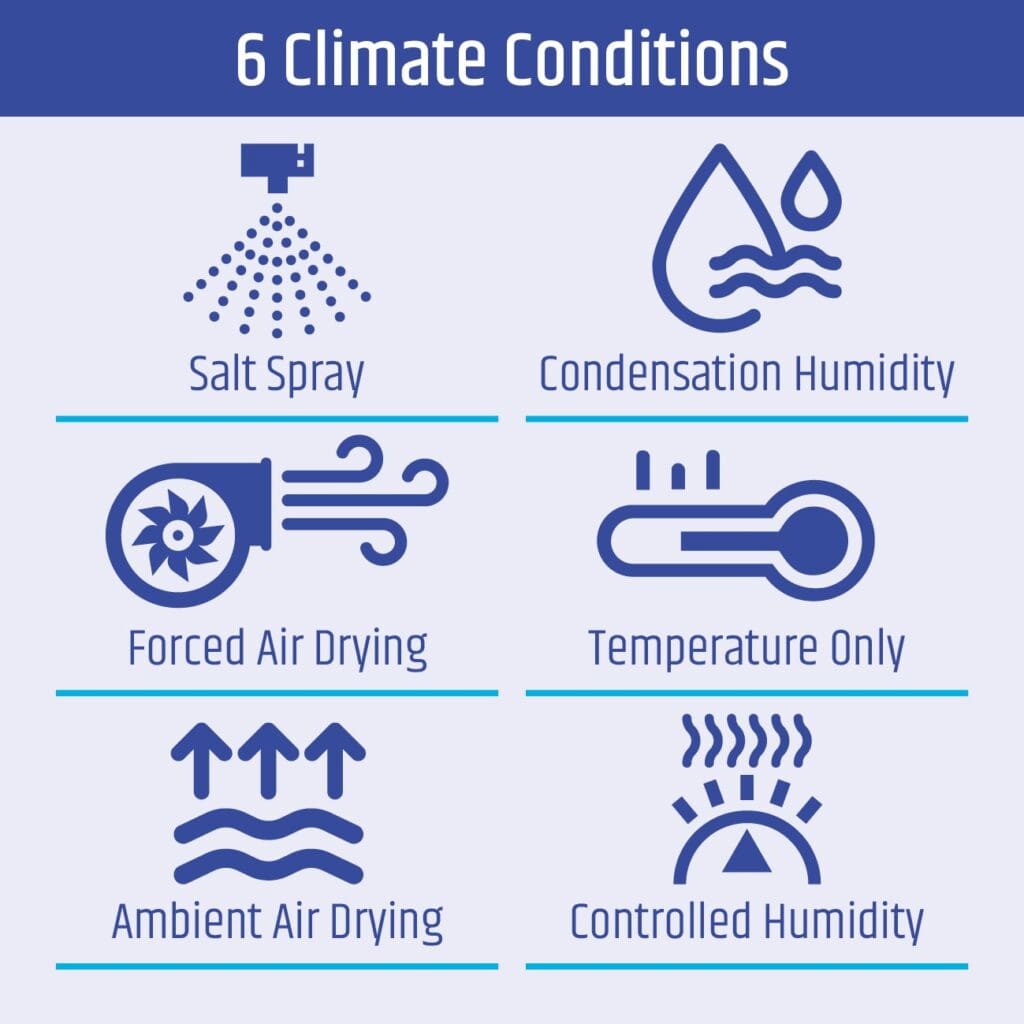
Salt spray → controlled humidity → condensation humidity → drying → controlled temperature → ambient drying →repeat

These changing conditions can provide a more sophisticated corrosion testing environment than traditional continuous salt spray testing and are increasingly specified by manufacturers developing coatings, materials and components for demanding applications.

The individual climates can be programmed in different sequences and for different durations before automatically repeating the cycle.

Six environmental conditions in one compact chamber

Depending on configuration, the CC300iP and CC400iP can provide:

Salt Spray

A precisely controlled corrosive salt fog environment.

Controlled Humidity

Temperature and relative humidity can be controlled for corrosion cycles requiring defined humidity conditions.

Condensation Humidity

Creates a saturated high-humidity environment where condensation forms on test specimens.

Forced Air Drying

Dry air is circulated through the chamber to create controlled drying stages.

Ambient Air Drying

The chamber can introduce laboratory ambient conditions during programmed test sequences.

Controlled Temperature

The chamber can also operate without salt spray or humidity as a temperature-controlled environment during selected stages of a test cycle.

Bringing these conditions together within a single compact cyclic corrosion chamber allows manufacturers and laboratories to perform increasingly sophisticated corrosion test programmes without requiring multiple pieces of equipment.

Designed for the modern test laboratory

Compact dimensions do not mean basic equipment.

The new range incorporates many of the features expected from Ascott corrosion testing systems, including touchscreen control, programmable testing, corrosion-resistant construction and safety systems designed around the aggressive environment created during salt spray testing.

A portable 115-litre salt solution reservoir is also provided, helping operators manage salt solution outside the main test chamber.

Customers can also choose from nine standard door colours, allowing equipment to complement an existing laboratory or corporate colour scheme.

Why laboratories are moving towards cyclic corrosion testing

Traditional neutral salt spray testing remains extremely important and is specified by standards including ASTM B117 and ISO 9227.

However, real-world corrosion rarely occurs under one constant environmental condition.

Components may experience moisture, salt contamination, temperature changes, periods of drying and changing humidity throughout their service life.

For this reason, manufacturers in sectors including automotive, aerospace, defence, electronics, coatings and general manufacturing increasingly use cyclic corrosion testing alongside conventional salt spray testing.

The ability to reproduce multiple environmental conditions within a controlled and repeatable laboratory test can provide engineers with valuable information when comparing materials, protective coatings and manufacturing processes.

Manufactured by corrosion testing specialists

Ascott Analytical has specialised in corrosion test equipment for more than 35 years, supplying salt spray and cyclic corrosion chambers to laboratories and manufacturers around the world.

The new Ultra Compact range expands that portfolio by providing another option for customers who need professional corrosion testing capability but do not require the capacity or footprint of a conventional large chamber.

Whether the requirement is straightforward ASTM B117 salt spray testing, ISO 9227 testing, modified salt spray testing or more advanced cyclic corrosion testing, the 300L and 400L range provides customers with a compact platform that can be matched to their testing requirements.

Find the right corrosion test chamber for your application

Choosing a corrosion chamber should be based on the test standards you need to perform, the dimensions and quantity of your test specimens and any future testing requirements.

Ascott’s team can review your required test standards and recommend the most appropriate salt spray or cyclic corrosion chamber configuration.

Contact Ascott Analytical to discuss your corrosion testing requirements or learn more about the new 300L and 400L Ultra Compact range.

Spring 2026 at Ascott Analytical

Spring 2026 at Ascott Analytical: Why corrosion testing can’t stand still

Spring is usually associated with fresh starts. In corrosion testing, it is also a good moment to pause and ask a tougher question: are the ways we test today really keeping pace with the environments products face tomorrow?

At Ascott Analytical, that question sits at the centre of everything we do. With more than 35 years of specialist experience, all cabinets built in Tamworth, and a singular focus on corrosion testing, we continue to support customers worldwide with solutions designed for precision, compliance and repeatability.

What feels especially relevant this spring is just how quickly expectations are rising. New materials. New coatings. More demanding standards. Greater pressure on manufacturers to prove durability earlier in development and with more confidence. That is why corrosion testing is no longer just a box to tick at the end of a project — it is becoming a more strategic part of product design, validation and quality assurance across automotive, aerospace, manufacturing, defence and research.

Salt spray testing still plays a vital role, and for many laboratories it remains the benchmark for consistent, repeatable testing to widely used standards such as ASTM B117 and ISO 9227. But the conversation does not stop there. Increasingly, customers want broader environmental simulation: cyclic corrosion testing that combines salt spray with wetting, drying, controlled humidity and temperature changes, and more advanced systems for demanding automotive requirements such as VDA 233-102 or newly developed standards such as Hyundai range CCT-A to CCT-F

That need for flexibility is shaping the way laboratories invest. Some customers need straightforward salt spray capability. Others need chambers that can create six distinct climates in sequence. Others are working with larger, heavier or more awkward components, where a standard chamber is no longer enough. Developments like CorroFlex and AtmosfärLite reflect that shift toward more tailored testing capability rather than one-size-fits-all equipment.

Another clear theme is efficiency. Performance will always matter most in environmental testing, but practicality matters too. Recent developments such as CO2 cooling and the innovative Atmosfar EcoCool temperature and humidity control unit point to a future where improved control, lower operating costs and simpler compliance considerations all matter alongside raw technical capability.

And of course, capability is only part of the story. Reliable testing depends on the service behind the chamber too — installation, training, calibration, preventive maintenance, spare parts and rapid support when it is needed. That ongoing support is a big part of helping customers keep their testing accurate, compliant and productive over the long term.

It is also the start of another busy events calendar, with Ascott continuing to meet customers and partners at international exhibitions and trade fairs throughout the year. Face-to-face conversations still matter, especially in an industry where application detail, standards knowledge and real testing challenges make all the difference.

So for us, spring is not just a season of renewal. It is a season of review.

Are your current test methods giving you data?
Or are they giving you confidence?

At Ascott Analytical, we believe the difference matters.

Because when products are expected to perform in tougher conditions, across more demanding standards, with less room for error, corrosion testing cannot stand still — and neither can we.

For any requests please contact us sales@ascott-analytical.com

Salt Spray Testing Guide | Procedures, Standards & FAQs

Salt Spray Testing — Complete Guide

Salt spray testing, also known as salt fog testing or corrosion testing, is a widely used method to evaluate the corrosion resistance of metals, coatings, and finished products. This guide covers everything you need to know, from test types and standards to procedures, applications, and FAQs.


What is Salt Spray Testing?

Salt spray testing is a laboratory procedure used to simulate a corrosive environment to evaluate the corrosion resistance of materials and coatings. By exposing test specimens to a controlled salt fog (usually sodium chloride solution), manufacturers can assess how long a product can withstand corrosion before visible deterioration occurs.

Applications include:

  • Automotive parts

  • Coated metals

  • Electronics and fasteners

  • Aerospace components


How Does Salt Spray Testing Work?

Salt spray chambers create a humid, saline environment where the test specimen is continuously exposed to a fine mist of salt solution. Over time, corrosion forms on susceptible materials, allowing engineers to:

  1. Evaluate coating quality

  2. Identify weak points in materials

  3. Compare performance between products or coatings

Key parameters include:

  • Salt solution concentration (commonly 5% NaCl)

  • Temperature (typically 35°C / 95°F) although some tests such as ISO 9227 require 50°C / 122°F

  • Duration of exposure (hours to hundreds of hours)


Types of Salt Spray Tests

1. Neutral Salt Spray (NSS)

  • Most common test type

  • Uses neutral pH (6.5–7.2) sodium chloride solution

  • Standard for evaluating corrosion resistance of painted or coated metals

2. Acetic Acid Salt Spray (AASS)

  • Uses acidic solution (pH ~3.1–3.3)

  • Accelerates corrosion, especially for zinc coatings

  • Common in automotive and galvanization testing

3. Copper Accelerated Acetic Acid Salt Spray (CASS)

  • Contains copper chloride and acetic acid

  • Highly aggressive test for plated metals

  • Evaluates protective coatings in harsh conditions


What Are Salt Spray Testing Standards?

Several international standards govern salt spray testing, including:

Standard Scope Typical Use
ASTM B117 Neutral salt spray test General metal corrosion testing
ISO 9227 Salt spray testing guidelines Coatings and industrial applications
ASTM G85 Modified salt spray tests Cyclic corrosion for automotive
ASTM D117 Paint and coating corrosion tests Coating performance evaluation

How Long Does Salt Spray Testing Take?

Salt spray testing duration depends on the material and coating type:

  • Mild steel: 24–48 hours to see corrosion

  • Coated metals: 96–500+ hours depending on coating quality

  • High-performance coatings: up to 1000 hours for automotive or aerospace

Tip: Testing should be aligned with the intended standard for accurate benchmarking.


Can Salt Spray Testing Predict Real-World Corrosion?

Salt spray testing provides accelerated corrosion data. While it’s excellent for comparing coatings, it does not exactly replicate natural corrosion conditions, which are affected by:

  • UV exposure

  • Temperature cycling

  • Humidity fluctuations

  • Pollutants (Such as SO2 Gas)

For realistic predictions, cyclic corrosion testing (CCT) or field exposure may be required.


Salt Spray Testing Procedure — Step by Step

  1. Prepare Specimens
    Clean and weigh specimens; apply coatings as needed.

  2. Set Up Chamber
    Fill with 5% NaCl solution (or specific solution for test type)
    Adjust temperature to 35°C ± 2°C

  3. Install Specimens
    Place specimens at a 15–30° angle to allow solution runoff.

  4. Start the Test
    Spray chamber continuously, monitoring solution concentration and pH.

  5. Inspect Specimens
    At intervals (e.g., 24, 48, 96 hours), check for corrosion spots, pitting, or coating failure.

  6. Document Results
    Record hours to first visible corrosion, type of corrosion, and appearance.


Common Salt Spray Testing FAQs

What materials can be tested in a salt spray chamber?

Metals, alloys, coated metals, plastics with metallic finishes, and fasteners.

How do I interpret salt spray test results?

Compare corrosion onset and severity against the applicable standard or specification.

How often should salt spray chambers be maintained?

Monthly cleaning, solution replacement every 4–6 weeks, and routine calibration of temperature and spray rate.

Is salt spray testing suitable for automotive coatings?

Yes, it is widely used for pre-production testing, but cyclic corrosion testing is more accurate for predicting real-world performance.


Why Choose Ascott Analytical ?

At Ascott Analytical, we provide:

  • We bring Over 37 years of experience in knowledge on corrosion topics

  • Wide range of chambers to suit your application

  • Excellent customer service with quick response times

  • Tailored solutions to customize testing conditions to meet your specific requirements and industry standards.

Contact us today to discuss your testing requirements and ensure your products meet industry standards.

CR 1 Test Panels for ASTM B117

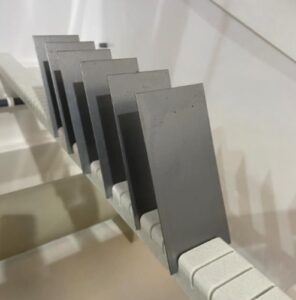
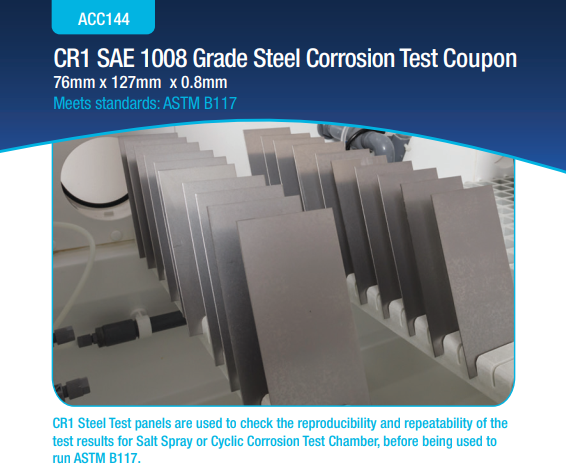
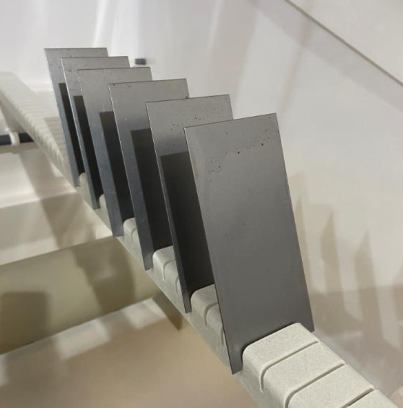
Ascott CR1 Steel Test Panels are precision-manufactured reference specimens designed for verifying performance in ASTM B117 Salt Spray Tests and cyclic corrosion testing. These test panels ensure your Salt Spray Chamber or Cyclic Corrosion Test Chamber is compliant, accurate, and reliable.

Why ASTM B117 Test Panels Are Essential

The ASTM B117 salt spray test is one of the most widely used corrosion testing standards. To achieve repeatable and reproducible results, it is vital to check the corrosivity of the chamber using ASTM B117 test panels. During continuous operation, apparatus verification should be carried out every 3 months.

Benefits of the Test Panels

    • Manufactured and tested to ISO 3574
    • Supplied with a Certificate of Conformance and a UKAS Test Certificate
    • Packaged in VCI corrosion-inhibiting paper and vacuum-sealed aluminium wrapping
    • Fully compliant for use in ASTM B117 test procedures

Technical Specifications

    • Material: Cold Rolled Steel CR1
    • Size: 76mm x 127mm (±0.2mm)
    • Thickness: 0.8mm (±0.2mm)
    • Pack Size: 20 panels
    • Product Code: ACC144

Preparation of the Test Panels

    1. Clean panels by degreasing only to remove oil, dirt, or contaminants.
    1. Weigh each panel to the nearest 1.0mg using an analytical balance and record the mass.

Correct Arrangement in the Test Chamber

    • Use a minimum of two test panels.
    • Place panels at a 15°–30° angle from vertical.
    • Position close to the salt fog collection funnels, with spacing at least 100mm from chamber walls.
    • Supports must be inert, such as plastic (optional accessory ACC16 available).

Order Test Panels Today

Keep your corrosion testing accurate and compliant. Ascott CR1 ASTM B117 Test Panels (ACC144) are available now in packs of 20 at Ascottshop.com For more information on ASTM B117 testing, visit the ASTM website.

Upcoming Event

Ascott Distributor in Turkey Attending MAKTEK KONYA Exhibition 2025

We are excited to announce that our trusted distributor in Turkey will be showcasing Ascott corrosion test chambers at the MAKTEK KONYA Exhibition 2025. The event will take place from 8th – 11th October at Konya TÜYAP, bringing together leading companies in machine tools, industrial equipment, and advanced testing technologies.

Location: Konya TÜYAP
Dates: 8th – 11th October 2025
Hall: 6
Stand: 631B
Visit the official MAKTEK KONYA website

The MAKTEK KONYA Exhibition is one of Turkey’s most important industrial fairs, attracting manufacturers, suppliers, and professionals from across the region. Visitors will have the opportunity to explore the latest developments in corrosion testing solutions, automation, and quality control systems.

At Hall 6, Stand 631B, our distributor will demonstrate how Ascott’s advanced corrosion test chambers help industries meet international standards for durability, reliability, and product performance. From salt spray testing to cyclic corrosion testing, our equipment is designed to deliver accurate and repeatable results, making it a trusted choice for automotive, aerospace, and manufacturing sectors.

If you are planning to attend MAKTEK KONYA 2025, we warmly invite you to visit our distributor’s stand. It will be an excellent opportunity to discuss your testing requirements, see our solutions in action, and learn how Ascott Analytical supports innovation and quality assurance worldwide.

Learn more about our corrosion test chambers or get in touch through our contact page to arrange a meeting at the exhibition.

EcoCool Temperature & Humidity Control Unit ACC125/1

ACC125 Eco Cool chiller and dehumidifier

The EcoCool Temperature and Humidity Control Unit is a free-standing, air-circulating unit designed to optimise environmental chamber performance. Using an advanced secondary cooling medium instead of traditional refrigerants, it removes the need to comply with complex F-Gas regulations while delivering exceptional temperature and humidity control.

Operation and benefits

The ACC125 EcoCool temperature and humidity unit draws air from the main chamber, chills and dehumidifies it, then returns it via insulated inlet piping. This process lowers the minimum achievable temperature and humidity, providing stable, precise conditions at reduced operating costs.

Installation requirements

As the system removes heat from the chamber, it releases it into the surrounding room. For optimal performance, maintain ambient conditions between 18 °C and 23 °C with a maximum relative humidity of 85%.

EcoCool Key Features

  • Innovative secondary cooling technology – no F-Gas compliance required
  • Improved temperature and humidity stability
  • Lower operating costs than traditional systems

Standards Compliance

Interested in a Corrosion Test Chamber?

Contact Us

Or speak to our sales team on +44 1827 318044.

View our Chamber Brochure

EcoCool Datasheet

Ascott Stock Chambers

Ascott Stock Chambers

If you are in need of a new salt spray or humidity chamber, and need a quick turnaround, there’s never been a better time to buy from Ascott Analytical.

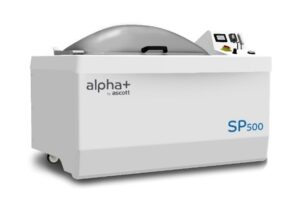
We have available in stock our Alpha+ range of chambers for immediate dispatch:

SP500/SP1000 – Salt Spray Chambers for continuous testing over 240 hours, in accordance with ASTM B117, JIS Z 2371, ISO 9227, DIN 50 021 plus many others. SP models are equipped with an advanced control system comprising a peristaltic pump based salt water delivery system.

H500– Saturated humidity chambers for temperature controlled, high humidity conditions.  In accordance with DIN 50 017, ISO 6270-2, VDA 621-421, ASTM D2247 plus many others.

To orders yours now please get in touch:
sales@ascott-analytical.com

Alternatively you can speak to one of our sales team on +44 1827 318044

The importance of Corrosion Testing in The Defence Sector

The importance of Corrosion Testing in The Defence Sector

In our fourth sector article, we look at the military & defence sector, which covers a vast array of products from aircraft components (like airframes, avionics, and connectors), naval vessels, weapons systems, vehicles (tanks, trucks), and marine/defence/naval electronic equipment, as corrosion can significantly impact their functionality and lifespan in harsh environments, leading to rigorous testing to ensure proper corrosion protection measures are in place.

Corrosion can significantly impact military equipment in several ways:

  1. Structural Integrity: Corrosion weakens the metal components of vehicles, ships and aircraft leading to potential structural failures. This can compromise safety and reliability, especially in combat situations
  2. Operational Readiness: Corrosion can cause critical systems to malfunction, reducing the operational readiness of military equipment. This can delay missions and reduce the effectiveness of military operations
  3. Maintenance Costs: The cost of repairing and replacing corroded parts can be substantial. Regular maintenance to address corrosion issues is necessary, but it also adds to the overall lifecycle cost of the equipment
  4. Performance Degradation: Corrosion can affect the performance of military equipment by causing issues such as increased friction, reduced efficiency, and potential breakdowns
  5. Aesthetic and Camouflage: Corrosion can degrade the appearance of military equipment, affecting the camouflage and making them more visible to adversaries

Salt is one of the most pervasive chemical compounds in the world. It is found in the oceans and seas, the atmosphere, ground surfaces, and lakes and rivers. It is impossible to avoid exposure to salt. The worst effects occur, in general, in coastal regions

Corrosion testing has long been used in this sector to meet the challenges of production and development of equipment and materials.

The most common standard for testing products which fall under the military/defence category is MIL-STD-810H The standard covers 28 different test methods, this article focuses on Test Method 509.7 Salt Fog, which is performed to determine the effectiveness of protective coatings and finishes on materials, to identify any potential problem areas, quality control deficiencies, design flaws, etc., in a relatively short time.

Typical problem areas include, but are not limited to:

Corrosion Effects.

  1. Corrosion due to electrochemical reaction.
  2. Accelerated stress corrosion.
  3. Formation of acidic/alkaline solutions following salt ionization in water.

Electrical Effects.

  1. Impairment of electrical materiel due to salt deposits.
  2. Production of conductive coatings.
  3. Corrosion of insulating materials and metals.

Physical Effects.

  1. Clogging or binding of moving parts of mechanical components and assemblies.
  2. Blistering of paint as a result of electrolysis.

To determine the effects of the above, test specimens are placed in an enclosed chamber and exposed to the following test profile:

Step 1. With the samples in the chamber, adjust the test chamber temperature to 35 °C and condition the test item for at least two hours before introducing the salt fog.

Step 2. Expose the samples to a 24 hour period of 5% salt spray at a rate of 0.5 to 3.0ml/80cm²/hour, in a chamber temperature of +35C , the pH of salt spray should be between 6.5 -7.2.

Step 3. Dry the test item at standard ambient temperatures and a relative humidity of less than 50 percent for 24 hours, generally accepted ambient conditions are laboratory environment 23C /50%RH

Step 4. Repeat steps 1 to 3 at least once.

The above can be modified as experience has shown that alternating 24-hour periods of salt fog exposure and drying conditions for a minimum of four 24-hour periods (two wet and two dry), provides more realistic exposure and a higher damage potential than does continuous exposure to a salt atmosphere

To perform the above test fully automatic in a single chamber with ambient climate control to 23C/50%RH , will require an Ascott Cyclic Corrosion chamber complete with external midi temperature and humidity climate control unit.

Other popular standards in this sector include:

  • MIL-STD-202
  • RTCA-DO-160
  • MIL-STD-750
  • MIL-STD-883
  • Plus many others

With current advances in technologies across all aspects of the defence sector and supporting industries, the need for testing keeps on growing.  Many breakthroughs in product development will be adopted by civilian industries over time, a process made easier by the rigorous testing demanded by this sector

Overall, corrosion is a significant challenge for maintaining the effectiveness, safety, and longevity of military equipment. In a situation where all equipment must be in constant readiness for possible deployment in any conditions globally, corrosion can cause major problems – addressing corrosion through regular testing, maintenance, and the use of advanced materials and coatings is essential for ensuring that military equipment remains operational and reliable.

Corrosion testing in the paint and surface coatings industry

Corrosion testing in the paint and surface coatings industry

In the third of this series of articles we take a look at the importance of corrosion testing for manufacturers of paints and other surface coatings

Corrosion testing is crucial for paint and surface coatings manufacturers to ensure their products provide effective and long-lasting protection.

Any substrate that is exposed especially out of doors will be subject to corrosive wear over time. In addition to natural weathering, abrasion and impact can accelerate this process.  Using a reliable and effective coating can dramatically reduce and slow this damage.

This is true for everyday paints and finishes that we might use in our own homes, right through to highly specialised coatings for industrial applications in extreme conditions.  So, from the humble tin of paint to refresh your gate to the specialised coating developed for an ocean pipeline, the principles are the same – to provide protection from the elements and longevity of coating.

Below are just some of the reasons why corrosion testing is so important to the paint and surface coatings industry

Durability and Performance: Corrosion testing helps assess the durability and performance of paints and coatings under various environmental conditions. This ensures that the products can protect surfaces from rust and degradation over time.

Quality Control: Regular testing ensures that paint formulations meet industry standards and performance expectations, leading to consistent product quality

Regulatory Compliance: Paint manufacturers must comply with various international standards, such as ISO 9227 and ASTM standards, which specify methods for corrosion testing

Material Selection: Testing helps in selecting the best materials and formulations for specific applications, whether for architectural, automotive, or industrial use

Innovation and Development: Continuous testing drives innovation, allowing manufacturers to develop new, more effective corrosion-resistant coatings

ASTMB117 is one of the most widely used Salt Spray Tests – Ascott Chambers are used around the world to deliver reliable and repeatable Salt Spray Testing.

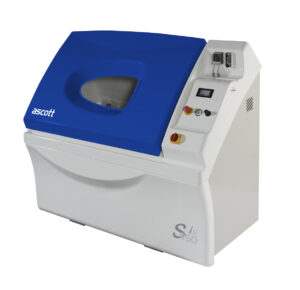
Ascott S450iS Chamber

For full compliance with ASTM B117, we also supply CorroSalt – highest purity salt that meets the following requirements:

Total Impurities; < 0.3%

Halides (Bromide, Fluoride & Iodide) excluding Chloride; <0.1%

Copper; <0.3ppm

Anti-caking agents; None

All CorroSalt is supplied with Certificate of Analysis and Certificate of Conformity.

In addition to providing world leading corrosion chambers, we also have a huge range of test equipment available at our online shop www.ascottshop.com   This includes wet and dry film measuring devices, coating performance equipment, film applicators and much more.

Offering a one stop shop for paint test equipment, we are continually adding to our range, so if there is something that you are looking for that you don’t find on our website, please contact us and we will do our best to help.

Paint and coatings manufacturers around the world have relied on Ascott to deliver reliable, accurate and repeatable results for many years. We are proud to partner with the leading names in this industry.

Contact us to find out more about our range of corrosion testing equipment to meet all needs.